A new simulation tool can help assess potential collateral damage before implementing disruptive IP-based blocking policies. ͏  ͏  ͏  ͏  ͏  ͏  ͏  ͏  ͏  ͏  ͏  ͏  ͏  ͏  ͏  ͏  ͏  ͏  ͏  ͏  ͏  ͏  ͏  ͏  ͏  ͏  ͏  ͏  ͏  ͏  ͏  ͏  ͏  ͏  ͏  ͏  ͏  ͏  ͏  ͏  ͏  ͏  ͏  ͏  ͏  ͏  ͏  ͏  ͏  ͏  ͏  ͏  ͏  ͏  ͏  ͏  ͏  ͏  ͏  ͏  ͏  ͏  ͏  ͏  ͏  ͏  ͏  ͏  ͏  ͏  ͏  ͏  ͏  ͏  ͏  ͏  ͏  ͏  ͏  ͏  ͏  ͏  ͏  ͏  ͏  ͏  ͏  ͏  ͏  ͏  ͏  ͏  ͏  ͏  ͏  ͏  ͏  ͏  ͏  ͏  ͏  ͏  ͏  ͏  ͏  ͏  ͏  ͏  ͏  ͏  ͏  ͏  ͏  ͏  ͏  ͏  ͏  ͏  ͏  ͏ ­ ­ ­ ­ ­ ­ ­ ­ ­ ­ ­ ­ ­ ­ ­ ­ ­ ­ ­ ­ ­ ­ ­ ­ ­ ­ ­ ­ ­ ­ ­ ­ ­ ­ ­ ­ ­ ­ ­ ­ ­ ­ ­ ­ ­ ­ ­ ­ ­ ­ ­ ­ ­ ­ ­ ­ ­ ­ ­ ­ ­ ­ ­ ­ ­ ­ ­ ­ ­ ­ ­ ­ ­ ­ ­ ­ ­ ­ ­ ­ ­ ­ ­ ­ ­ ­ ­ ­ ­ ­ ­ ­ ­ ­ ­ ­ ­ ­ ­ ­ ­ ­ ­ ­ ­ ­ ­ ­ ­ ­ ­ ­ ­ ­ ­ ­ ­ ­ ­ ­ ­ ­ ­ ­ ­ ­ ­ ­ ­ ­ ­ ­ ­ ­ ­ ­ ­ ­ ­ ­ ­ ­ ­ ­ ­ ­ ­ ­ ­ ­ ­ ­ ­ ­ ­ ­ ­ ­ ­ ­ ­ ­ ­ ­ ­ ­ ­ ­ ­ ­ ­ ­ ­ ­ ­ ­ ­ ­ ­ ­ ­ ­ ­ ­ ­ ­ ­ ­ ­ ­ ­ ­ ­ ­ ­  
View in browser
Internet Society Pulse logo

October  2026 | Reading time 5 min

Simulate the Collateral Damage of IP Blocking

Modern Internet services are built on shared infrastructure. A single IP address can be used by different websites, applications, APIs, or customers. Cloud providers, content delivery networks (CDNs), and hosting companies make extensive use of this model.


As a result, blocking one IP address can be like closing the road leading to a building because of a problem with one resident. The intended target may become inaccessible, but so can many completely legitimate websites.


Through the 2026 Pulse Research Fellowship, Alfred Arouna and his colleagues found that blocking a single IP address belonging to a popular Content Delivery Network (CDN) could make around 1.2 million popular websites—about 7% of those we studied— inaccessible. Blocking this IP, together with IPs belonging to a major marketplace provider and a leading search engine, could increase the collateral damage to more than 10% of popular websites.


To draw attention to the impact of these actions, they developed an IP Blocking Collateral Damage Simulator to help policymakers, ISPs, and users assess the potential impact of blocking different combinations of IP addresses on popular websites.

By adding IP addresses to be blocked, the simulator provides:

  • The number of potentially affected domains by the blocked IPs.
  • The list of other IPs, if any, that resolved to the affected domains.
  • The list of countries where some affected domains may be blocked, according to OONI data.
IP-Blocking-Simulator

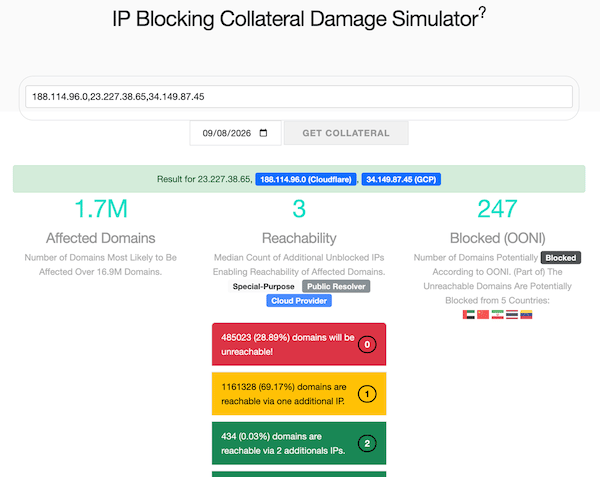
The screenshot above shows that blocking the three IPs 188.114.96.0, 23.227.38.65, and 34.149.87.45 could affect around 1.7 million domains, and that around 69% of these domains could still be reached via one additional IP.


The figure also shows that 247 affected domains may potentially be blocked in countries including the UAE, China, Iran, Thailand, and Venezuela, based on OONI data. Clicking on each reachability category provides further details about the affected domains and their alternative IP addresses.


The simulator uses publicly available domain-to-IP mappings, mainly covering popular websites. It therefore provides a lower bound rather than a complete picture. Less popular, regional, or unmapped domains may be missing, meaning the actual collateral impact of IP blocking could be higher.

Explore an early-stage prototype of the IP-blocking Collateral Damage Simulator

On the Pulse Blog

  • Inside the M9 Outage: Measuring the Impact of a Major Russian Internet Hub Failure

  • A QUIC Evaluation of the Internet in Space

  • What We Learned About Encrypted DNS on India’s Networks

  • Detecting IPv4 Subnets in the Wild

  • [Pulse Fellow] How Big Can a Packet Be?

  • [Pulse Fellow] Simulate the Collateral Damage of IP Blocking

  • When Sanctions Start Breaking the Internet

  • Eight Years of Fixed Internet Inequalities, Dominican Republic

Do you have a story or research to share? Email us pulse@isoc.org

Upcoming Events

Internet Measurement Day: Almaty

30 September, Romania

Internet Society Pulse is supporting the final IMD in 2026.

Pulse Research Week 2026

1—4 December, Istanbul, Türkiye

Join us again for three events across four days of collaborative and mindful Internet measurement research discussions.

  • Pulse Internet Measurement Forum, Türkiye

  • Peering Research Day

  • Internet Data Trust Workshop

See our event page for the latest agenda.

Stay tuned to our event page for details of our events in 2026. And email us at pulse@isoc.org if you’re interested in hosting, partnering, sponsoring, or presenting opportunities.

Learn More About PIMF

Share Your Pulse Engagement Experience

Pulse is so much more than data: It's the context, research, and community that makes sense of it through this newsletter, the Pulse Blog, and Pulse events.


To help us improve how we engage with you and our expanding community in 2026, we'd appreciate it if you could take 7 minutes to complete a survey. For your troubles, we're awarding another two USD 100 digital vouchers for the Internet Society swag shop.

Take our survey

Internet Shutdowns

Recent and Ongoing Shutdowns

  • India 9—10 Oct: Mobile Internet services were again suspended within a 4 km radius of Jantar Mantar, New Delhi, during protests.
  • India, 2 Oct:  Mobile Internet services to be suspended in and around Delhi’s Jantar Mantar during protests.
  • Gabon, 18 Feb—Ongoing: Gabon authorities ordered the indefinite suspension of major social media networks amid protests.
  • Uganda, 17 Jan—Ongoing: Facebook and Facebook Messenger remain blocked.
  • Iran, 8 Jan—Ongoing: Local authorities ordered the suspension of Internet connectivity due to ongoing protests against the government.
  • Togo, 26 Jun 2025—Ongoing: Service blocking
  • Iraq, 18 Feb 2025—Ongoing: Regional, Kurdistan
  • Pakistan, 15 Nov 2024—Ongoing: Regional, Balochistan
  • Equatorial Guinea, 20 July 2024—Ongoing: Regional, Annobón
  • Palestine, 7 Oct 2023—Ongoing: Regional, Gaza Strip
  • Iran, 20 Sep 2022—Ongoing: Service blocking
  • Russia, 26 Feb 2022—Ongoing: Service blocking
  • Myanmar, 2 Feb 2021—Ongoing: Service blocking
See the Latest Shutdown Data

Community News

Submit and Apply

  • Enrolments are open for the new Internet Society Fellowship Program.
  • To become eligible to apply for the fellowship program, participants must enroll in and complete all required Pre-Fellowship Training modules before 22 November. 

 Read, Listen, and Watch

  • 📑 INSM Foundation for Digital Rights has published a new report, Fear as a Form of Governance: Digital Rights Under Pressure in Egypt, Iraq, and Tunisia
  • 📺 Watch a recording of the recent UN Human Rights Council's 63rd session, at which a new UN OHCHR report on protecting human rights defenders in the digital age was presented.
  • 🐙  Read what OONI got up to at FIFAfrica2026.
  • 🍯 One week on the APNIC honeynet: 99,000 IP addresses and 173 million events.

    Email us to feature your news, events, reports, and stories pulse@isoc.org

Help Achieve an Internet for Everyone

Internet access can impact so much. For decades, the Internet has enabled us to create, grow, and learn more than we ever imagined.


Your gift helps keep the Internet a place of possibility for those of us who know and love it, and expands to reach people who have yet to take advantage of the opportunities it affords.


Donate today
Internet Society logo

This message was sent to email by the Internet Society. Please add us to your safe list to ensure delivery.

 USA

1551 Emancipation Hwy #1506, Fredericksburg, Virginia 22401-4683, United States,


Internet Society Pulse

Have questions? Contact pulse@isoc.org


Follow us on X, LinkedIn, and Bluesky

Unsubscribe from future emails or Manage email preferences